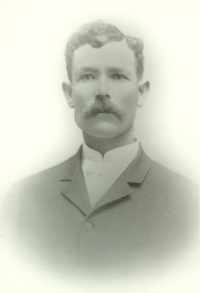
Adams Family Life History
William Henry Adams Life History
Early Life in England
William Henry Adams, son of John Adams and Mary Nash Adams, was born on June 4, 1817, in Dover, Hythe, Kent, England.
Apprenticeship and Preservation
At the age of eight, William was apprenticed to a master craftsman, as was the custom in England at the time. Before beginning his apprenticeship, his primary responsibility had been herding cows. English law required every apprentice to learn a trade, and William chose the trade of stonemasonry. His early years were spent performing the hardest labor, mixing mortar, carrying stone, and assisting experienced masons.
As his skills increased during the final years of his apprenticeship, he became involved in constructing substantial brick buildings, many of them several stories high. One day, while working on the upper story of a building, William lost his footing and fell between the floor joists toward the ground below. His fellow workers watched in horror, certain that he had fallen to his death. Miraculously, as he plunged through the building, his work jacket caught on a large spike protruding from one of the joists, stopping his fall.
His companions rushed to free him and were astonished to discover that he had escaped without a single scratch. William always regarded this remarkable experience as evidence of the Lord’s protecting hand over his life. Much of William’s work also involved building brick arches in tunnels. This difficult labor exposed him to harsh weather and damp conditions, often requiring him to work all day beneath constantly dripping water.
Marriage, Illness, and Conversion
After completing his apprenticeship, William purchased a horse and cart and established a small hauling and delivery business, much like an early moving or express service. Through hard work and determination, the business prospered. On November 3, 1839, at just twenty years of age, William married Martha Jennings. Together they later opened a small grocery store, which proved successful enough that they were able to save one hundred dollars in gold—a considerable fortune for a young couple in those days.
Not long after their marriage, William became critically ill with typhoid fever. His condition became so severe that the attending physicians believed he would not survive. During this difficult time, William offered a heartfelt prayer to the Lord, promising that if his life were spared, he would devote the remainder of it to God’s service. That promise would shape the course of his entire life.
Soon afterward, William met Elder William Booth, a missionary from The Church of Jesus Christ of Latter-day Saints. Elder Booth shared the message of the Restoration and testified that an angel had appeared to Joseph Smith, restoring the everlasting gospel to the earth. The message touched William and Martha deeply. On July 23, 1840 William and Martha were baptized by Elder Booth, becoming members of The Church of Jesus Christ of Latter-day Saints.
William was the first person baptized into the Church in Dover. As the little branch of the Church grew, William was called to preside over it. At his own expense, he rented a small meetinghouse where the Saints could gather to worship. Together, William and Martha devoted themselves to sharing the restored gospel with friends and neighbors, and many accepted their message and joined the Church.
Gathering to Zion
As the branch continued to flourish, the call came for the Saints to gather to Zion. With faith and sacrifice, William and Martha sold their grocery business and used their carefully saved one hundred dollars in gold to finance their journey to America. Before leaving England, they organized the branch, bid an emotional farewell to William’s blind mother and sister, and departed with heavy hearts, leaving behind the graves of their two infant daughters, Mary and Martha. After a difficult nine-week voyage aboard the Sailor Prince, they arrived in America in the fall of 1847.
Crossing the Plains
Traveling to Council Bluffs, Iowa, William purchased 160 acres of land with a small log cabin, believing they would settle there. During that first winter, the Adams family became well acquainted with many of the Church leaders, including Apostle Willard Richards, Second Counselor to President Brigham Young. When spring arrived, Elder Richards encouraged William to continue west with the Saints to the valleys of the mountains. William purchased a sturdy wagon, a yoke of oxen, and two milk cows to prepare for the long journey.
The cows not only sustained his own family with milk and butter but also provided nourishment for fellow pioneers who had little to eat during the trek west. While crossing the plains, tragedy nearly struck the family. As William attempted to ford a stream, one of the wagon wheels dropped into a deep hole, overturning the wagon. After reloading the supplies, a pepperbox pistol that had been set aside was picked up by a fellow traveler named Mr. Wilson.
While examining the firearm, it accidentally discharged. The bullet passed through the right knee and lodged halfway through the left knee of William’s four-year-old son, William Jr. With no physician available, the pioneers quickly fashioned a crude operating table from a wagon tongue.
Using only a pocketknife and without anesthesia, three men carefully searched for and removed the bullet. The injury appeared devastating, and many believed the little boy would never walk again. However, Willard Richards stood in his wagon and, in the name of the Lord, prophesied that the child would walk before the company reached the Salt Lake Valley. Three weeks later, that prophecy was fulfilled.
Young William was once again walking.
Salt Lake City and the Call South
On October 10, 1848, the pioneer company of 526 people and 169 wagons entered the Salt Lake Valley. William selected a vacant lot near Willard Richards on the west side of Market Square and immediately began building a modest one-room adobe home. Before winter arrived, he hauled cedar logs from the nearby mountains to provide fuel for his family during the cold months ahead.
Founding Pleasant Grove
William remained in Salt Lake City until the summer of 1850, when President Brigham Young called him, John Mercer, and Philo T. Farnsworth to explore Utah County and identify new places for settlement. Their first camp was at Dry Creek, now known as Lehi. After surveying the area, the three men continued south until they reached a beautiful grove of towering cottonwood trees beside a clear mountain stream.
William was especially impressed by the abundance of straight timber for building and the plentiful rock that could be used for foundations. Recognizing the area’s potential, the three men determined that this was the ideal place to establish a new community. On July 19, 1850, William Henry Adams, John Mercer, and Philo T. Farnsworth became the first settlers of what would later become Pleasant Grove.
They immediately surveyed the townsite, each selecting forty acres for himself and helping lay out the future community. Returning to Salt Lake City on July 24, they reported their findings to President Brigham Young and received his blessing to move their families into the new settlement. Soon afterward, George S. Clark, who had been appointed presiding bishop of the little colony, wrote his first letter to President Young.
Referring to the beautiful grove of cottonwood trees surrounding their settlement, he titled his letter “Pleasant Grove.” The name was fitting and has remained ever since. On August 5, 1850, William and Martha welcomed the birth of their son, John. Because of the baby’s arrival, the family remained in Salt Lake City for nearly two additional months before making the journey south to their new home. Winter came early that year, leaving little time to gather logs or construct permanent houses.
Like many of the other pioneers, William placed his wagon on cedar logs to keep it above the damp ground, and his family spent the winter living inside their wagon while preparing for the future. With the arrival of spring in 1851, the settlers eagerly began transforming the wilderness into a thriving community. They broke camp, moved onto their farms, fenced their land, plowed fields, planted crops, and built homes. Through countless hours of labor, faith, and cooperation, Pleasant Grove slowly began to take shape.
Masonry, Schools, and Public Service
As one of the community’s few skilled stonemasons, William’s talents were soon in constant demand. Long before coming to Utah, he had mastered his trade in England, and his craftsmanship became invaluable in the growing settlements throughout the territory. He had already helped construct some of the earliest stone and adobe buildings in Salt Lake City, and after settling in Pleasant Grove he devoted much of his life to building the new community. In 1855, he helped construct the first Pleasant Grove Meetinghouse, a building that faithfully served the Saints until it was destroyed by fire in 1871.
When Johnston’s Army established Camp Floyd in 1858, William worked as a mason constructing military barracks, earning the respectable wage of $3.50 per day. The income helped support his growing family during the difficult pioneer years. In the early 1860s, William built his own adobe home on Main Street and Third South in Pleasant Grove. Education was important to William, despite the fact that he had never attended school himself.
Through determination and lifelong study, he taught himself to read, write, spell, and keep accurate financial records. His desire to strengthen the community led him to assist in the construction of its schools. In 1861, he carefully laid the adobe bricks reclaimed from the first two schoolhouses to build Pleasant Grove’s third school. Nearly twenty years later, in 1880, he and his son, Joseph Hyrum Adams, added a second room to the same building, which also served as a gathering place for the community.
William’s skill as a builder left an enduring mark on Pleasant Grove. Homes, public buildings, schools, and meetinghouses throughout the town bore the workmanship of his hands. Those who knew him remembered that he was always willing to accept whatever a family could afford in payment, often valuing the needs of his neighbors above his own financial gain. His service extended far beyond construction.
William served eight terms as Pleasant Grove’s treasurer and tax collector, earning the complete confidence of the townspeople. His accounts were said to be “as straight as a shingle,” reflecting his unwavering honesty and careful stewardship. He also served for many years as secretary of the High Priests Quorum, faithfully recording its minutes and preserving the history of the Saints in his community.
Family, Loss, and Frances Otten Crossland
On August 6, 1852, William and Martha traveled to Salt Lake City, where they received their endowments from Heber C. Kimball in the Old Council House. They rejoiced in being sealed together for time and all eternity, grateful for the blessings the restored gospel had brought into their lives. While in Salt Lake City, however, they slept on bedding made from green grain that had been brought to feed their horses.
The damp bedding caused Martha to develop a severe illness. Shortly after returning to Pleasant Grove, her condition worsened. After suffering for nine days, Martha passed away on August 17, 1852. She was only thirty-three years old and became the first person to be buried in Pleasant Grove.
Her death left William heartbroken. He was suddenly faced with raising six young children alone, the youngest only nine days old. Friends and neighbors rallied around the grieving family, helping care for the children while William struggled to provide for them. The following years brought additional hardship.
During 1853 and 1854, swarms of grasshoppers devastated nearly every crop in the valley. Like many pioneer families, the Adams family endured severe hunger, surviving at times on mushrooms, roots, and sego lilies. Through faith, perseverance, and the support of their community, they weathered those difficult years and gradually rebuilt their lives. Six years after Martha’s passing, William found happiness again when he met Frances Ann Otten Crossland, a widow who understood the hardships of pioneer life.
Frances had lost her first husband, Junius Crossland, who died while crossing the plains near the Bear River Valley, leaving her to continue the journey alone. On July 3, 1858, William and Frances were married. Her arrival brought renewed hope to the Adams home. William was grateful to have a loving companion once again, and his six children were blessed with a devoted mother who cared for them as her own.
Together with William’s nearly blind mother, Frances lovingly nurtured the growing family and brought warmth and stability back into their home. Although their one-room adobe house was small, it was filled with faith, love, and hard work. William and Frances welcomed three more children into their family: Alice Mariah, born May 14, 1859; Annie Jane, born March 10, 1861; and Joseph Hyrum, born February 22, 1865, the only son born to Frances. Like all pioneer families, they shared in the sacrifices and challenges of frontier life, but they also enjoyed the blessings that came through unity, perseverance, and faith in God.
William devoted his life to building both homes and communities. His reputation as a master stonemason spread throughout Utah County, and his craftsmanship could be seen in many of Pleasant Grove’s earliest buildings. Long after the pioneers themselves were gone, the structures he built stood as quiet reminders of his skill and dedication. He was more than simply a builder of buildings—he helped build the community itself.
Character, Faith, and Legacy
His neighbors knew him as a man who would never refuse honest work. If a family lacked money, William willingly accepted produce, livestock, labor, or whatever they could offer in exchange for his services. He believed that helping others was more important than accumulating wealth, and he never allowed financial hardship to prevent someone from receiving the help they needed. Music also brought joy to William’s life.
Blessed with a fine singing voice, he often entertained family, friends, and neighbors with songs that lifted spirits during the demanding years of pioneer settlement. Although William had never attended school as a child, he believed deeply in the value of education. Through determination and personal study, he taught himself to read, write, spell, and calculate with remarkable accuracy. He developed a broad knowledge of history and could converse intelligently about the rise and fall of nations, astonishing many who assumed that formal schooling was the only path to learning.
His integrity became one of his defining characteristics. The citizens of Pleasant Grove repeatedly entrusted him with public office. William served eight terms as the town’s treasurer and tax collector. Those who worked with him often remarked that his books were “as straight as a shingle,” a tribute to his careful record keeping and unquestioned honesty.
Within the Church, William faithfully accepted every calling extended to him. For many years he served as secretary of the High Priests Quorum, carefully recording its minutes and preserving an important record of the early Saints in Pleasant Grove. He paid an honest tithe throughout his life and never hesitated to support the work of the Lord. When President Brigham Young called upon the Saints to contribute a double tithe during the early years of the settlement, William paid his in full without complaint, considering it both a privilege and a sacred responsibility.
Those who knew William admired more than his industry—they admired his character. He refused to quarrel with others, even when he had been treated unfairly. He believed that peace, forgiveness, and honesty were always preferable to contention. His word was considered as dependable as a written contract.
By the time his life drew to a close, he had achieved something of which he was quietly proud: he did not owe any person a single cent. William never forgot the promise he had made as a young man lying dangerously ill with typhoid fever in England. The Lord had spared his life, and William honored that sacred covenant every day thereafter. He frequently bore heartfelt testimony of the restored gospel and often shared with his children and grandchildren the miracles he had witnessed throughout his life—the miraculous preservation of his own life when he fell from a building during his apprenticeship, and the remarkable healing of his young son after the accidental gunshot wound while crossing the plains.
To his family, these were not simply remarkable stories. They were witnesses that God knew them personally and watched over them through every trial. As a father, William was remembered as kind but firm. He loved the scriptures, honored the priesthood, and believed that the strongest sermons were preached through example.
His children remembered a man whose quiet faith, steady work ethic, and unwavering integrity influenced them far more than words alone ever could. One of William’s greatest joys was watching Pleasant Grove flourish. He had first seen the area as an untouched grove of cottonwood trees watered by a clear mountain stream. Over the years, he watched farms replace sagebrush, homes replace wagons, schools educate children, and meetinghouses gather the Saints together.
Knowing that he had been among the first three settlers and had helped lay the physical foundations of the town brought him deep satisfaction. By the end of his life, William Henry Adams had become one of Pleasant Grove’s most respected pioneer citizens. He was remembered not because he sought recognition, but because he consistently lived a life of faith, honesty, service, and hard work. The homes, schools, meetinghouses, and public buildings he helped construct were lasting monuments to his hard work and craftsmanship.
His legacy was one of quiet strength—a man who honored his promises, loved his family, served his neighbors, built his community, and remained faithful to The Church of Jesus Christ of Latter-day Saints until the very end.